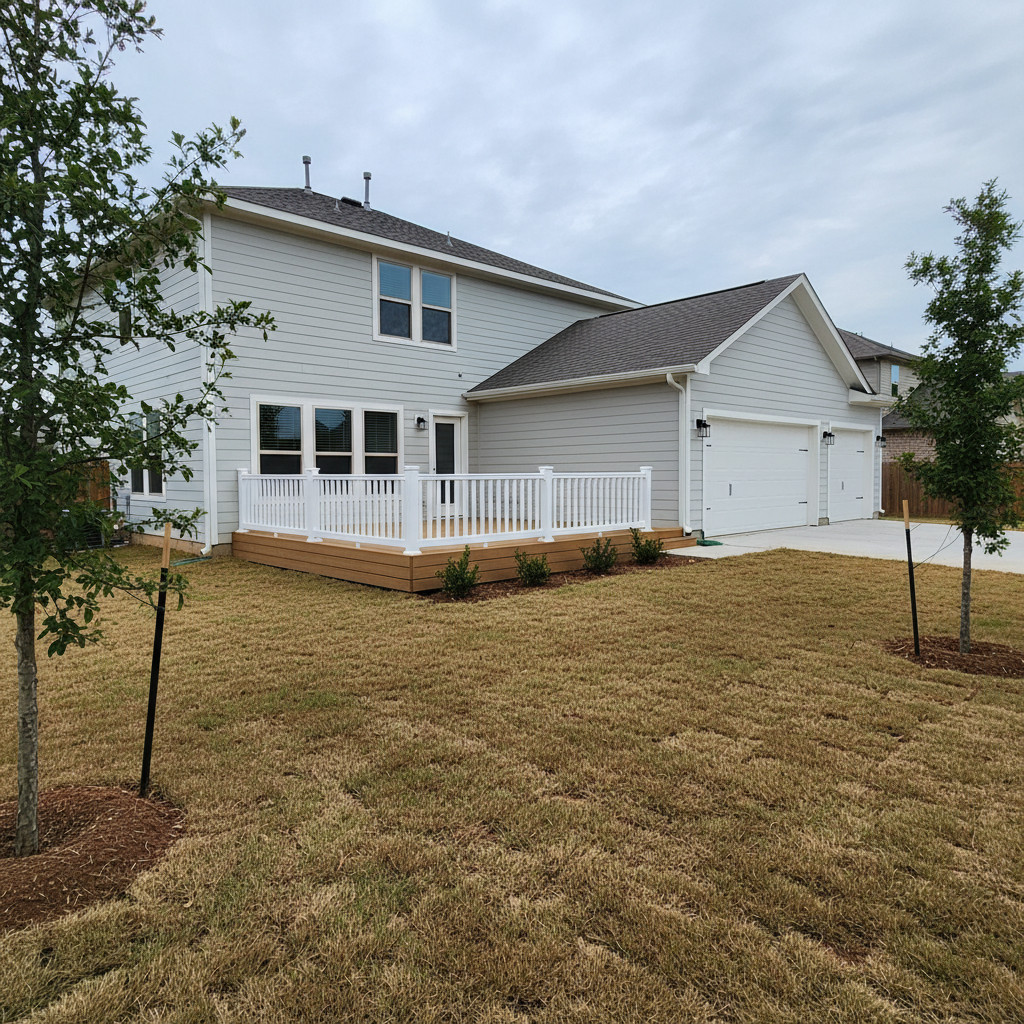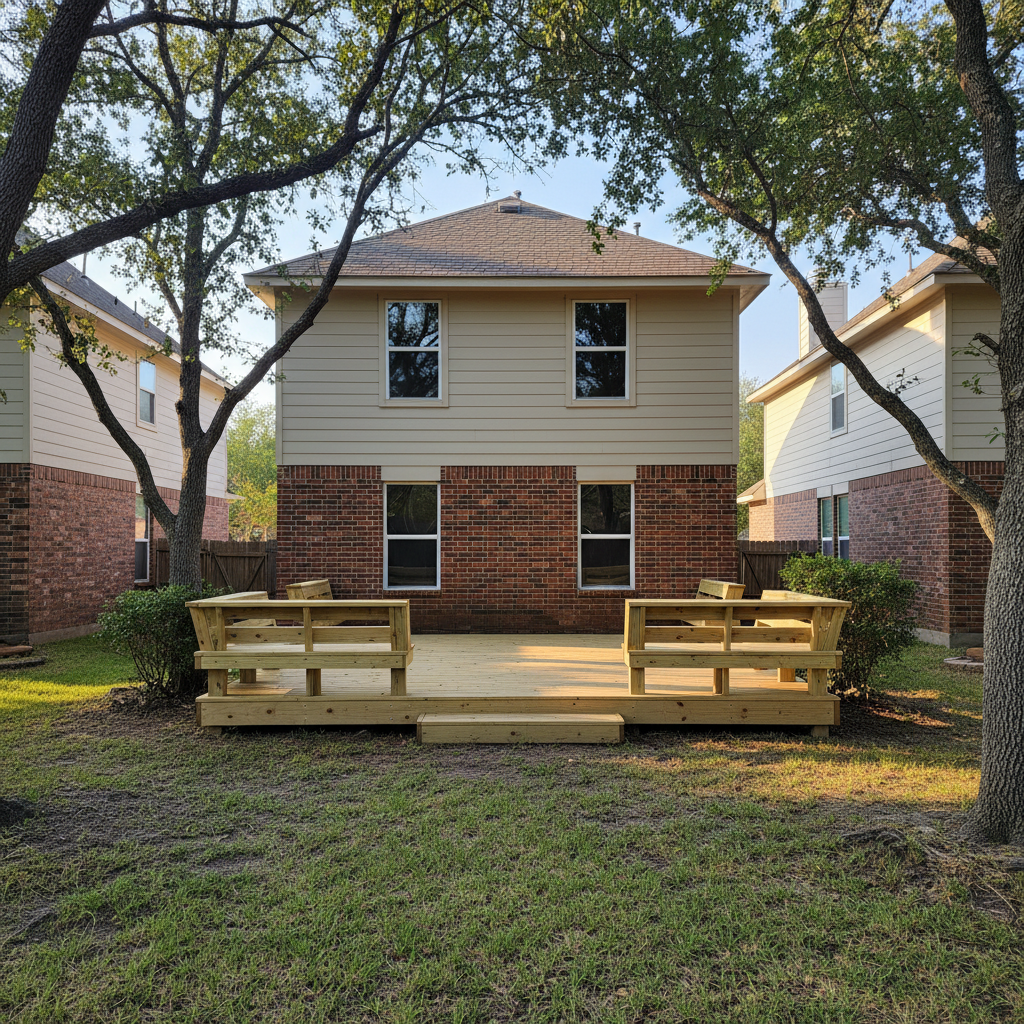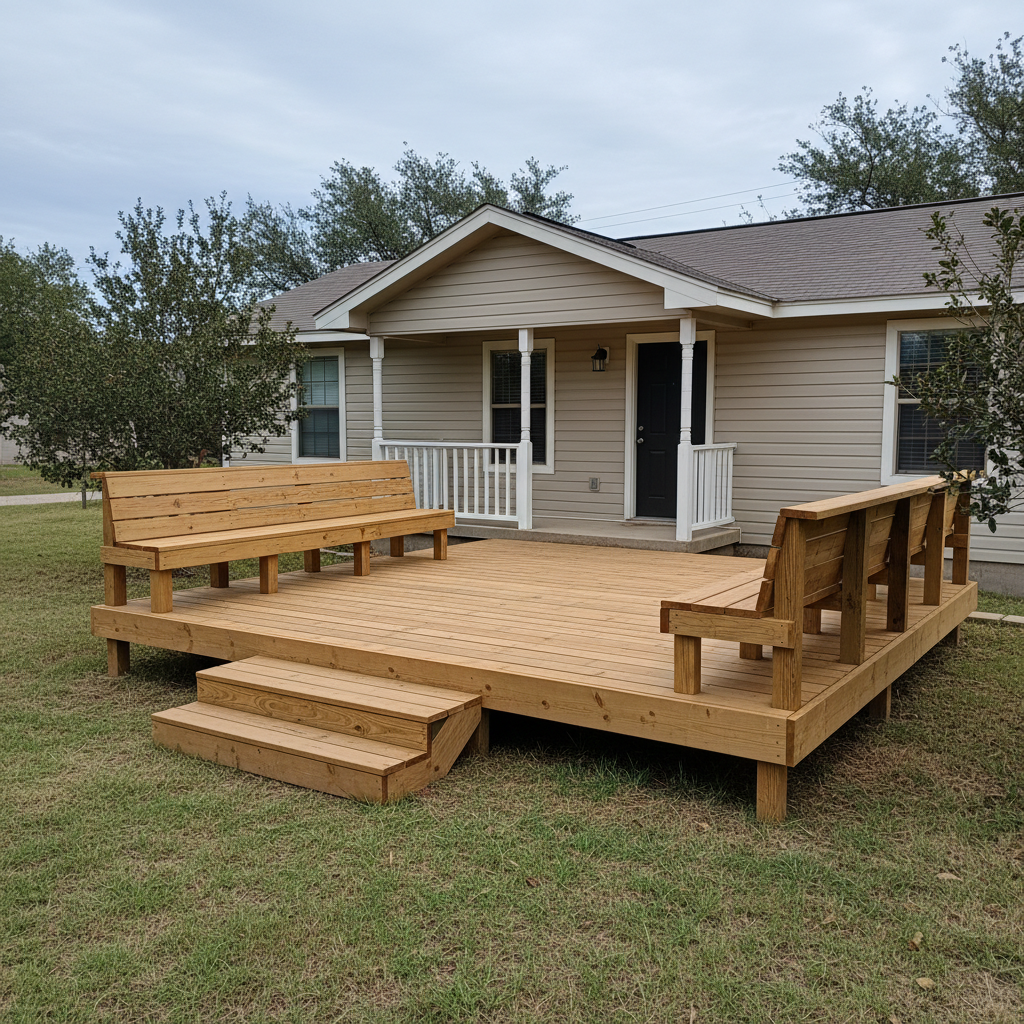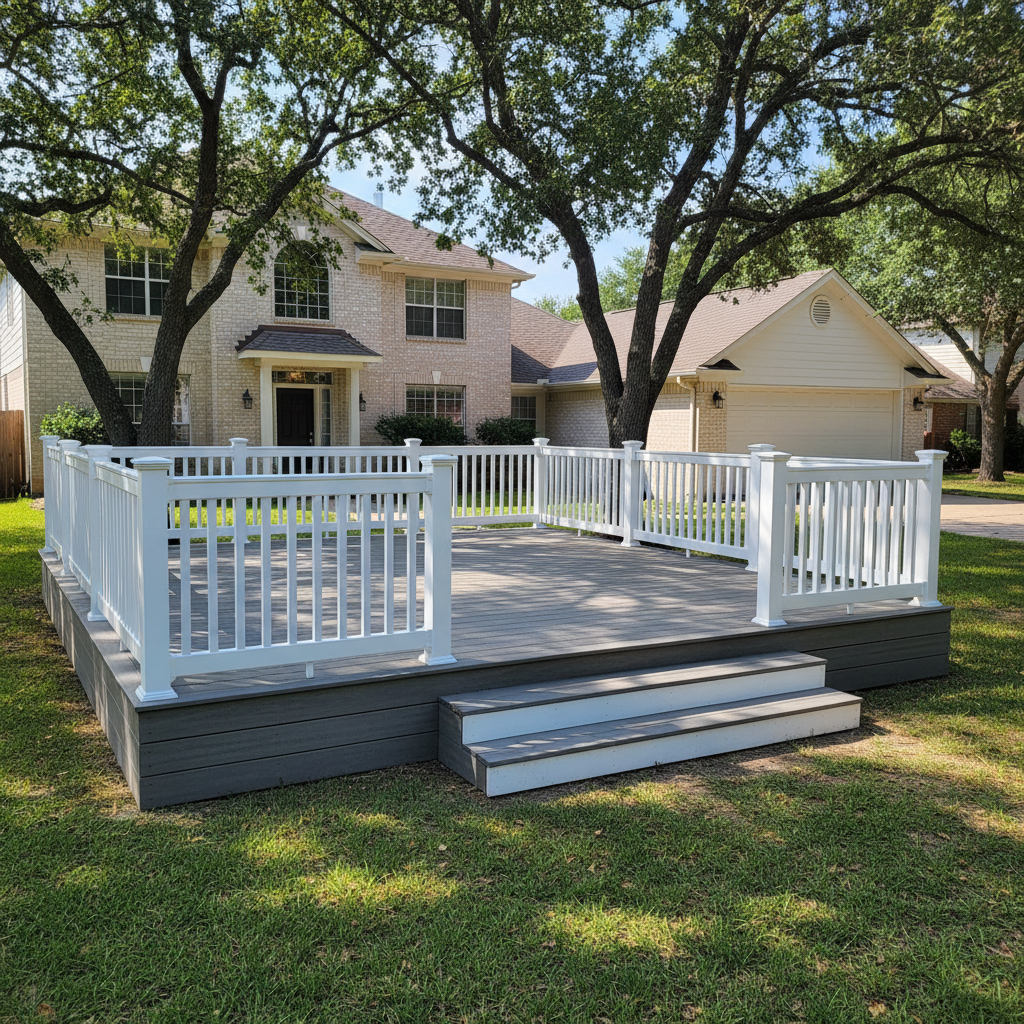
We build and repair decks for homeowners across Garland and the north Dallas suburbs. Most of us came up doing general carpentry and framing work, and decks became the thing we kept getting pulled back to, because it's one of the few jobs where you stand on the finished work the same day you build it.
If you're reading this, chances are a board's gone spongy underfoot, a post has shifted, or the whole structure just doesn't feel as solid as it used to. We pull the decking back far enough to see what the frame and footings are actually doing, not just patch the board you can see, so the fix holds instead of coming back as the same repair next year.
None of this is complicated. It is mostly just doing what we said we would do.
We carry the insurance a deck project actually calls for, since this work involves ladders, power tools and sometimes tearing out an old structure. Ask for certificates before we start, we'll hand them over without any hassle.
Deck permits in most DFW cities depend on height, footprint and whether it's attached to the house, and we handle that paperwork so you don't have to chase it down. Building to code also matters when you sell the house, since an unpermitted deck can hold up closing.
Deck demo creates a lot of splintered wood and bent nails, and we bag it and haul it out at the end of each day, not just at the end of the job. You shouldn't be finding screws in your yard with a lawnmower six months later.
Our quotes list the board type, hardware and footing work separately, so you can see exactly what you're paying for and where you could save by switching materials. We don't pad a quote with vague line items like miscellaneous or site prep.
Texas weather pushes schedules around, especially in spring, and we'd rather tell you about a two-day rain delay upfront than leave you guessing. Once we're on site, we stay until the job's done instead of splitting our crew across three decks at once.
Pressure-treated pine costs less upfront but requires restaining every two to three years in this heat, cedar holds color longer but costs more, and composite costs the most but holds up with almost no upkeep. We'll walk you through what each one actually costs over ten years, not just what it costs to install.
Questions about who you'd actually be hiring.
Free estimate, a price in writing, and work we stand behind.